Makary’s Hammer: FDA Signals the End of the GLP-1 ‘Shortage Arbitrage’ Era
[EXECUTIVE SUMMARY]
The pharmaceutical landscape is witnessing a major regulatory shift. On February 6, 2026, FDA Commissioner Marty Makary announced decisive measures to restrict GLP – 1 active pharmaceutical ingredients (APIs) used in non – FDA – approved compounded drugs that are mass – marketed by companies like Hims & Hers as alternatives to FDA – approved drugs. As the FDA tightens regulations on unapproved mass – compounded GLP – 1 products amid eased drug shortages, the regulatory barriers protecting Big Pharma giants such as Novo Nordisk are being further strengthened.
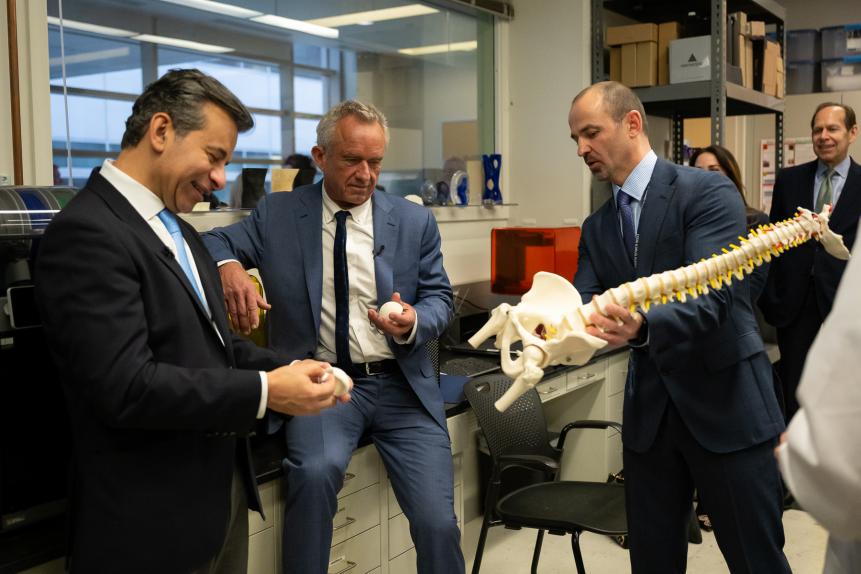
(HHS Photo via U.S. FDA Official Site – April 2025)
The Conflict: Stringent Regulatory Measures for GLP-1 Market Disruptors
The fast-growing market for non-FDA-approved compounded GLP-1 drugs has just run up against stringent regulatory restrictions. Following telehealth giant Hims & Hers’ launch of an oral semaglutide compound at a $49-per-month subscription price, FDA Commissioner Marty Makary issued a definitive regulatory warning: the era of high-volume, digital-first distribution of unapproved compounded GLP-1 medications—an industry-referenced “gray market”—faces immediate enforcement action.
The Catalyst: Hims & Hers’ Bold Play
Hims & Hers attempted to disrupt the weight – loss sector by introducing a compounded oral semaglutide (same active ingredient as Novo Nordisk’s Wegovy) at a fraction of the cost.
- The Price Gap: While Novo Nordisk’s official oral Wegovy retails for approximately $149/month for self – paying patients (for the 1.5mg starting dose), Hims & Hers offered their compounded version at an introductory subscription price of $49/month, with subsequent monthly subscriptions at $99.
- The Claim: The company claimed its proprietary formulation could support the absorption of oral semaglutide by protecting the active ingredient during digestion—a move designed to increase access to the high – demand drug, though the compounded product is not FDA – approved.
The Regulatory Counter-Offensive
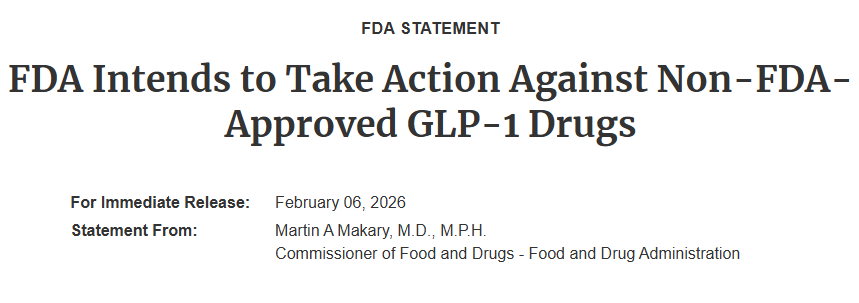
Commissioner Makary’s response via social media was swift and uncompromising. He characterized the mass production and marketing of these versions as the distribution of “illegal knockoffs.” His argument rests on several key pillars:
- Public Safety: The FDA cannot vouch for the purity, stability, or efficacy of unapproved compounded formulations.
- Misleading Marketing: Makary accused companies of creating a “false equivalence,” tricking consumers into believing these unregulated products are identical to FDA-approved therapies.
- Enforcement Pledge: The Commissioner signaled a major shift in FDA policy, moving from passive observation to active “crackdown” mode against companies utilizing telehealth platforms to scale compounded drug sales.
Novo Nordisk’s Stance
The Danish pharmaceutical giant, currently locked in a fierce battle with Eli Lilly for weight-loss dominance, did not mince words. A spokesperson labeled the Hims & Hers product as an “untested counterfeit” and accused the company of deceptive advertising. For Novo Nordisk, the stakes are high; their oral Wegovy is a cornerstone of their strategy to regain market share from injectable competitors.
Market Implications: The “Makary Effect”
The impact on the financial sector was immediate:
- Big Pharma Relief: Novo Nordisk (NVO) shares saw a significant uptick of over 7%, as investors grew confident that the FDA would protect intellectual property and brand integrity.
- The End of the Loophole: Compounding is traditionally reserved for individual patient needs during shortages. Makary’s comments suggest that using a temporary shortage as a “shield” for a long-term, mass-market business model will no longer be tolerated.
- Telehealth Under Fire: This sets a precedent for other direct-to-consumer health platforms. Digital convenience does not grant immunity from federal drug-approval standards.
Capital Diary Strategic Insight
The Regulatory Iron Fist vs. Digital Disruption
The current standoff is more than a pricing dispute; it is a fundamental collision between “Digital Health Disruption” and “Traditional Regulatory Sovereignty.”
Hims & Hers attempted to weaponize pharmacy compounding—a practice originally intended for bespoke patient needs—into an industrial-scale alternative to patented drugs. By exploiting the regulatory flexibility granted during periods of drug shortages, they treated high-stakes specialty pharmaceuticals as low-cost commodities.
Strategic Judgments:
- The “Shortage Arbitrage” is Ending: The explosive growth of compounded GLP-1s was a byproduct of supply gaps. As Novo Nordisk and Eli Lilly stabilize their production, the FDA’s window of tolerance will shut. Platforms like Hims & Hers face an existential threat unless they pivot toward legitimate distribution of branded products.
- The Rise of “Proactive Regulation”: Makary’s public denouncement signals a shift toward a more vocal and preemptive FDA. This “Makary Era” will likely be characterized by zero tolerance for telehealth business models that prioritize rapid scaling over rigorous federal standards.
- The Pricing Paradox: While the FDA is technically correct on safety, their actions create a PR challenge: they appear to be guarding Big Pharma’s premium pricing in the public perception. The $100 price gap between the compound and the branded drug will keep the FDA under intense public scrutiny regarding healthcare affordability.
Final Take
Hims & Hers tried to “hack” the pharmaceutical supply chain, but they miscalculated the regulator’s resolve to protect the sanctity of the drug approval system. The market is being forced back into an arena where clinical validity and strict compliance are the only tickets to entry.
Disclaimer: This briefing is for informational purposes only and does not constitute financial, investment, or medical advice. Capital Diary is an independent news platform and is not affiliated with the companies mentioned. Investing in biotech and pharma involves significant risk.